Flying Clocks

Q: Why did Tomás throw the clock out the window?Flying Clock
A: He wanted to see time fly!

Explanation: “Time flies” means that time seems to pass quickly as in the expression, “time flies when you are having fun.”  Of course if you throw a clock then the clock, which shows the time, is flying.  This joke plays with the words “time flies,” both the figurative meaning and the literal meaning.

As winter comes to Minnesota, I kind of hope that time flies and that spring comes soon.
Posted in ELL, ESL, humor, Joke | Tagged , , , , , , , , , , , , , | Leave a comment

Teddy’s Door

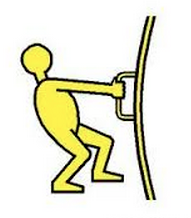
Knock, knock!Pull on door

Who’s There?

Theodore.

Theodore who?

Theodore is stuck and it won’t open!

Explanation:  Yesterday, teddy bears.  Today, Theodore: thee-o door.  The last part of the name “Theodore” sounds like “door.”  If you say the whole name fast it can almost sound like “thee door” or “the door.”  This joke is funny because it is not Theodore who is knocking at the door but someone who says the door is stuck.

Posted in ELL, ESL, humor, Joke, Knock knock | Tagged , , , , , , , , , , , , | Leave a comment

Stuffed!

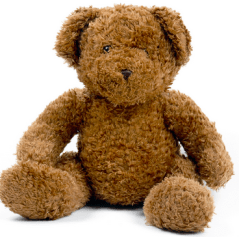
Q: Why are teddy bears never hungry?teddy bear
A: They are always stuffed!

Explanation: After you finish eating you could say, “I am full” or you might say, “I’m stuffed.”  Both expressions mean the same thing: you have eaten enough and you do not need to eat any more.

If you were to open a teddy bear you would find “stuffing” inside.  Stuffing is the material that makes the bear soft and cuddly.  Teddy bears are also known as “stuffed animals,” that is, toy animals that are soft and are full of stuffing.

This joke plays on the double meaning of the word “stuffed.”  Of course teddy bears are stuffed!  But they never eat anything.

Posted in ELL, ESL, humor, Joke | Tagged , , , , , , , , , , | Leave a comment

What do you knead?

Q: What did the baker say when he found his lost dough?kneading dough
A:  “That’s just what I kneaded!”

Explanation: “To knead dough” is to push and pull it; that is what you do to the dough before you let it rise.  “To knead” sounds just like “to need.”  This joke plays on these phrases that sound the same.  Do you knead more of an explanation?  No, but you might need more of an explanation.

Posted in ELL, ESL, humor, Joke | Tagged , , , , , , , , , , , , | Leave a comment

Above Me

Q: Did you hear the joke about the roof?look up over your head
A: Never mind, it’s over your head!

Explanation: “Over your head” can have two different meanings: 1) something is literally above you; 2) something is too hard for you to understand.  For example: 1) the ceiling of the room I am in is over my head and keeps the snow off my shoulders; 2) Quantum physics is “over my head” because I do not understand it.

This joke plays on the double meaning of the phrase “over your head.”  Get it?  Or is it over your head?

Posted in ELL, ESL, humor, Joke | Tagged , , , , , , , , , , , | Leave a comment

Baby Dribbler

Q: When is a baby good at basketball?baby dribble

A: When it’s dribbling!

Explanation: “To dribble” the basketball means to bounce the ball as you walk or run down the basketball court.  “To dribble” is also to let saliva drop from your mouth.  Babies often dribble, that is, they drool, they let saliva or food or milk come out of their mouths.

This joke is funny because it plays on the double meaning of the word dribble; babies cannot dribble a basketball but they dribble all frequently.

Posted in ELL, ESL, humor, Joke | Tagged , , , , , , , , , , , | Leave a comment

Hum a few bars

Q: Why do scientists think humming birds hum?Hummingbirds
A: Because they can’t remember the words!

Explanation:  “To hum” can be to sing, “la, la, la” when you don’t know the words to a song or keep your lips together and make the notes of a song. This joke is funny because hummingbirds don’t really hum; they chirp. They’re birds!  I wonder why they can’t remember the words?

Here is a scene where Ingrid Bergman hums a few bars.

Posted in ELL, ESL, humor, Joke | Tagged , , , , , , , , , | 1 Comment

Fowl Play

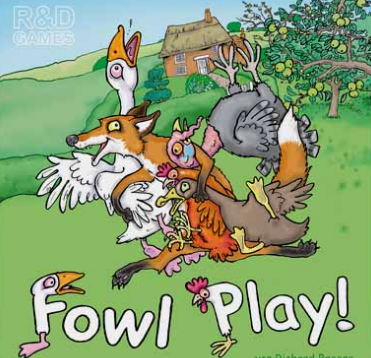
Q: Why did the police arrest the turkey?Fowls playing

A:  They suspected it of foul play!

Explanation: “Suspected of foul play” means that the police think you did something illegal.  The group of birds that include chickens, duck, geese and turkeys are known as fowl.  “Foul” and “fowl” sound the same.  This joke plays with the word fowl/ foul and is really a lot funnier if spoken, not read.  (A foul is also a mis-play in a sport such as basketball.  Isn’t English fun!)

Posted in ELL, ESL, humor, Joke | Tagged , , , , , , , , , , , , | Leave a comment

Having Family for Thanksgiving

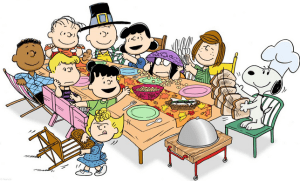
Q: Should you have your whole family for Thanksgiving dinner?Family Thanksgiving

A: No, you should just have the turkey!

Explanation: Another joke that plays with a double meaning.  Imagine a conversation like this: “What did you have for dinner?”  “I had soup and bread.”

“To have _____ for dinner” is to eat whatever you put in that blank space.  Yesterday I had turkey for dinner.  I did not have my family, that is, I did not eat my family (thank goodness!).

To “have your family for dinner” can also mean to invite them over to eat dinner with you.  That is why the joke is funny.  The listener is expecting advice on whether or not to invite the family over for dinner.  The answer shows that the questioner had a different meaning in mind.  It reminds me of a Twilight Zone episode, To Serve Man.

Happy day after Thanksgiving!  And no, I am not going shopping.

Posted in ELL, ESL, humor, Joke | Tagged , , , , , , , , , , , | Leave a comment

Turkey Feathers!

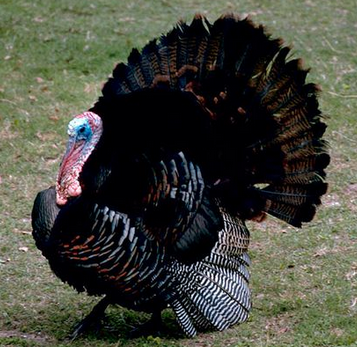
Q: Which side of the turkey has the most feathers?Turkey

A: The outside!

Explanation: At first when you hear this joke, the expectation is that the answer will be the right side or the left side, perhaps the top, bottom, front or back.  What the listener does not expect is the outside; that answer is too obvious.  That is why the joke is funny!

Happy Thanksgiving Day!

Posted in ELL, ESL, Joke | Tagged , , , , , , , , , , , | 1 Comment